
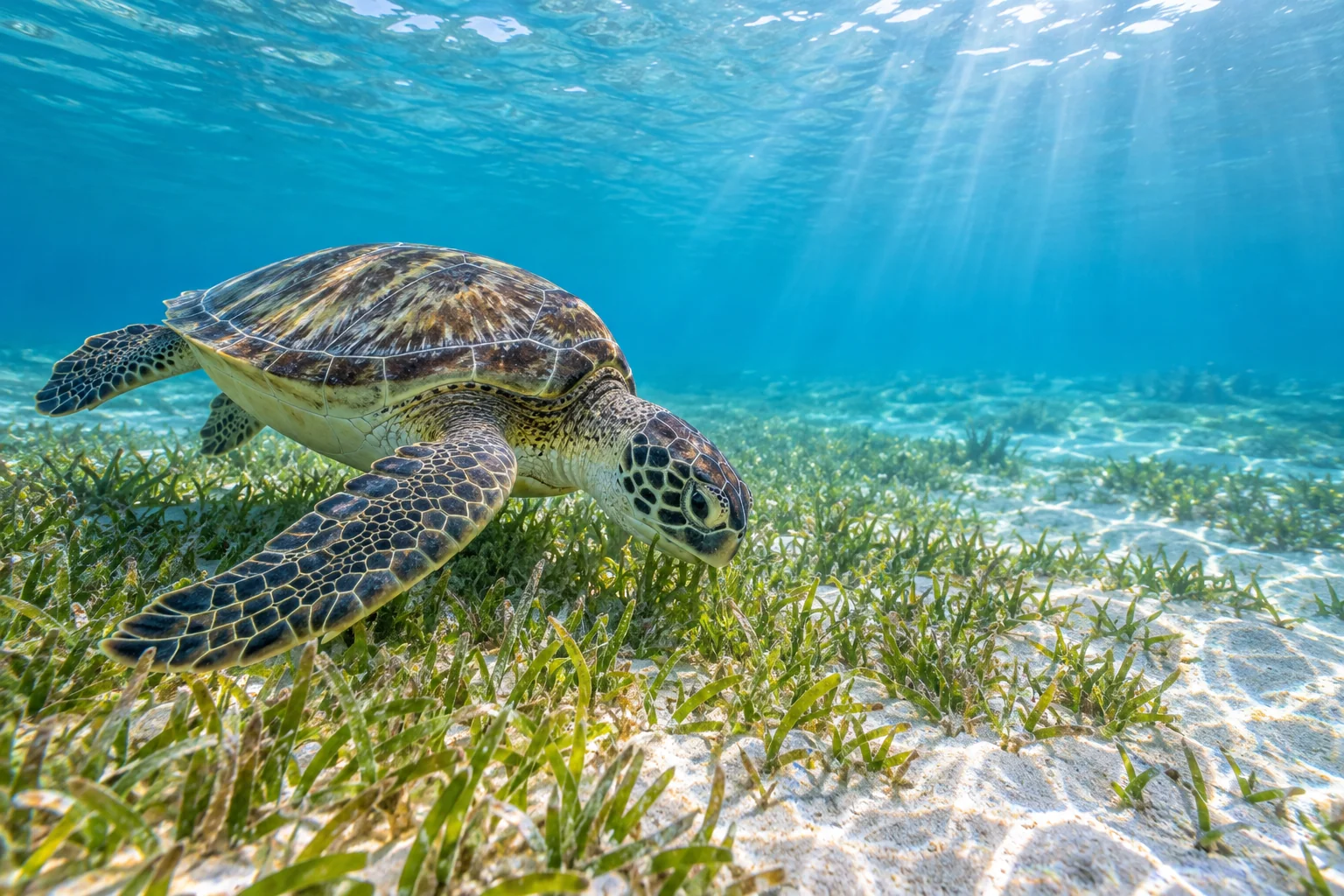
Seagrass, sargassum and coral are different things
Seagrasses have roots, rhizomes and leaves and can form underwater meadows. Sargassum is algae; the floating material discussed in beach-condition updates is not the same as a rooted seagrass bed. Coral describes another kind of marine community.
A dark patch seen from a boat or in a photograph is not enough to identify the bottom. Nor does vegetation alone tell you whether water is suitable for entering. For recent shoreline conditions, use the separate sargassum guide and ask about the actual stop.
Read the tour without adding a habitat visit
| Tour | Published basis | Confirm before booking |
|---|---|---|
| Saona Classic | Shared catamaran format with one beach stop | Which water activities are expressly included. |
| Saona Premium | Four named stops on a shared speedboat route | The actual water activity; no separate seagrass stop is listed. |
| Private boat | An individually agreed vessel and route | Feasible access and any nature interest, without wildlife promises. |
What the local research establishes
Diez, Vélez-Zuazo and van Dam’s 2003 report describes Saona’s Manglar study site as a seagrass habitat and records Thalassia testudinum and Syringodium filiforme. Those scientific names identify plants documented at that study site, not species you are guaranteed to recognise on a tour.
Keep the date and scale clear: a research observation is not a current survey of every Saona beach. The study site is not presented here as a visitor attraction. Saona’s place within Cotubanamá provides context, not permission to enter a particular habitat.
A habitat, not a wildlife appointment
Seagrass leaves create structure for small marine organisms, while roots and rhizomes help hold sediment. Meadows can provide feeding and shelter habitat. These ecological roles explain why underwater vegetation matters even when a visitor sees no conspicuous animals.
The Saona study also recorded turtles in that habitat in 2003. It cannot predict your own encounter. A turtle’s feeding habitat, a nesting beach and conservation work in Mano Juan are different subjects; the turtle guide explains those distinctions without promising sightings.
Five questions for a marine-nature enquiry
- Which water activities are actually planned for our date?
- Is a nature interest a request or an agreed activity?
- How do we enter and leave the water?
- What equipment, guidance and visitor-care instructions apply?
- What are the complete quote and applicable change terms?
Keep plants and the seabed undisturbed
As visitor-care advice, avoid standing on plants, pulling leaves or dragging fins and belongings through vegetation. Keep waste secure and do not clear plants to make a photograph. Ask the crew where entry and movement are permitted before getting into the water.
Do not leave an agreed swimming area to investigate a patch seen in the distance. If you cannot maintain control without standing on vegetation, discuss another arrangement or remaining aboard. This is care guidance, not an assessment of swimming suitability or a statement of local law.
Plan the activity your tour actually offers
Natural Pool time, beach swimming and a dedicated snorkeling activity are not interchangeable. Premium’s published route names the Natural Pool, Toro Beach, Mano Juan and Canto de la Playa; it does not name a separate seagrass visit. Research and scenery do not add an activity to that list.
Tell the team whether your interest is learning about marine habitats, swimming or snorkeling. Ask what can actually be included for your date, with the entry method, equipment, guidance and complete quote. Use the existing Premium form to discuss the route; an enquiry does not confirm an extra stop.
Questions about Saona’s seagrass
Is seagrass the same as sargassum?
No. Seagrasses are rooted flowering plants; sargassum is algae. For a current beach update, ask about the place and date rather than treating all marine vegetation as one issue.
Can I identify a meadow from a dark patch in a photo?
Not reliably from colour alone. Bottom type, depth and viewing conditions can affect the appearance. Do not use the photograph as proof of habitat identity, access or water suitability.
Will seagrass mean I see turtles?
No. A documented habitat association is not a prediction of a sighting. Do not approach or follow animals to try to create an encounter.
Does my Saona tour include a seagrass stop?
Do not assume so. Premium’s published list does not name one. Confirm the activities in your chosen tour; a private enquiry also needs a feasible, permitted route.
Editorial scope
Ecology checked against FWC and NOAA; the local historical record is Diez, Vélez-Zuazo and van Dam, Marine Turtle Newsletter 102 (2003). Tour context follows LoveSaona’s linked pages. Checked 21 November 2026; no current habitat survey, access, sighting or specialist service is established.