
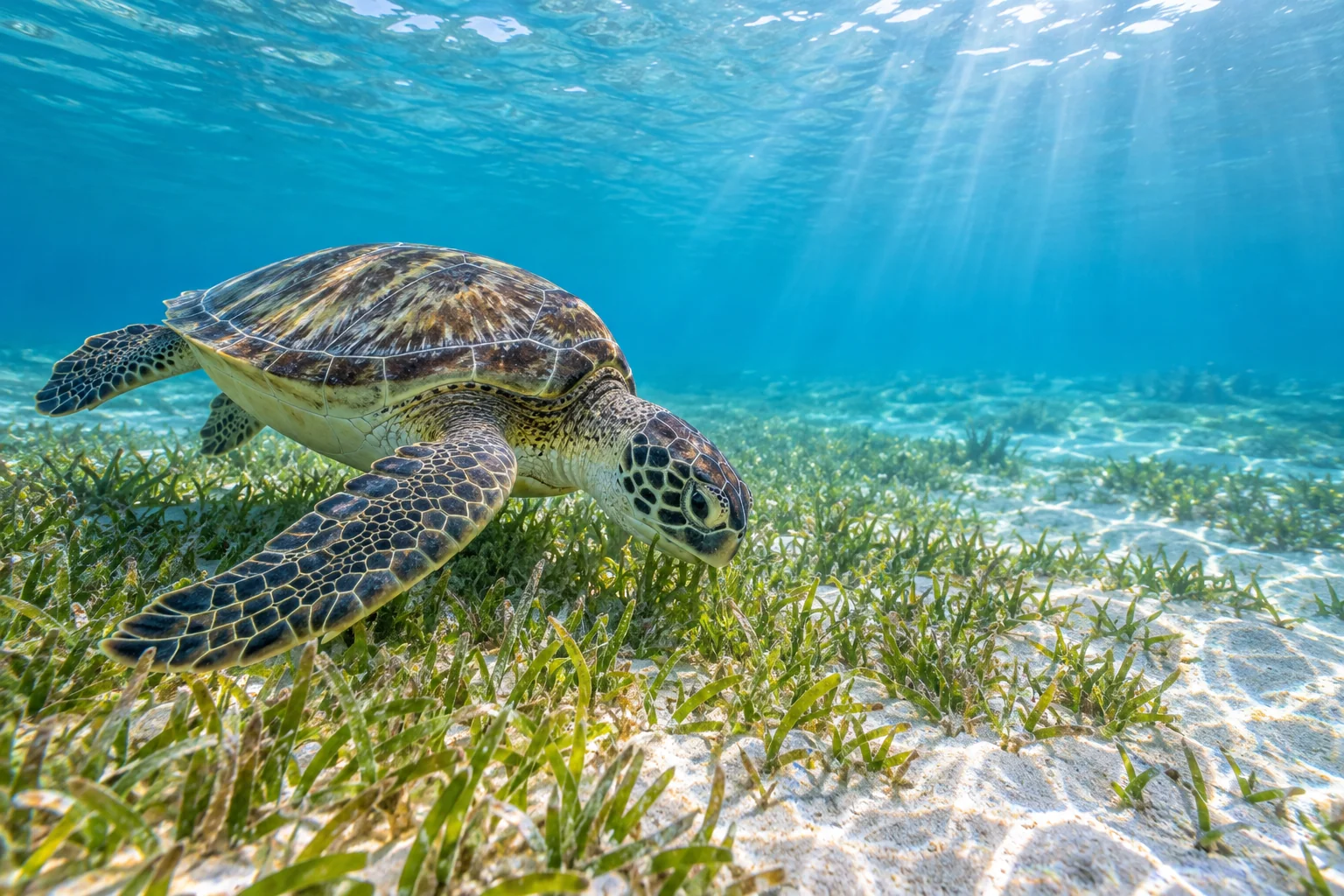
Why Saona matters to sea turtles
The Dominican tourism board identifies Saona as an important turtle-nesting destination. The Saona Turtle Project records hawksbill, green and leatherback turtles nesting on the island. These are Eretmochelys imbricata, Chelonia mydas and Dermochelys coriacea; they are different species, not stages in one turtle’s growth.
Nesting on a sandy beach and feeding in the sea are different parts of turtle life. Grupo Jaragua describes coastal feeding habitats such as reefs and seagrass beds. A nesting beach is therefore not a place where a daytime visitor should expect turtles to be waiting, and clear water is not a sighting guarantee.
Read the route without adding an animal promise
| Tour | Published route basis | What to confirm |
|---|---|---|
| Saona Classic | Shared catamaran format with one beach stop. | Do not assume Mano Juan or a conservation visit is included. |
| Saona Premium | Smaller shared speedboat route naming Mano Juan. | Whether a project visit is possible and expressly included. |
| Private boat | Exclusive vessel and an individually discussed route. | Feasible access, agreed visit, landings and complete group quote. |
How Mano Juan connects community life and conservation
Grupo Jaragua documents work with park rangers to monitor nests and support turtle conservation on Saona. Its account identifies Pelagio Paulino, known as Negro, with this work in Mano Juan. The Saona Turtle Project also describes protecting eggs through monitored incubation and beach patrols. This is conservation work rather than an aquarium performance.
These accounts explain the project’s context; they do not establish today’s visitor opening, staffing or admission arrangements. A useful visit would be an opportunity to learn about protection, when access is confirmed. Do not infer a LoveSaona partnership, a donation from your ticket or permission to handle animals.
A project visit is not a promise of turtles or a release
An educational visit, a wild sighting while swimming and the emergence of hatchlings should not be sold as interchangeable experiences. Nesting and hatching follow biological processes, not a daily excursion timetable. No month or departure described here promises babies, nesting adults or a release for visitors.
If seeing the project matters to your trip, ask whether a visit is currently possible, who confirms access, what is planned and whether a charge applies. A photograph from a previous visit does not establish what you will find. If snorkeling is also a priority, check that activity separately from the village stop.
Five questions for a conservation-focused enquiry
- Is Mano Juan part of our confirmed itinerary?
- Is a conservation visit currently possible, and who confirms access?
- What is the visit expected to involve, without promising animals?
- What time ashore, landing arrangements and any charges are agreed?
- What happens if project access or the operating plan changes?
Support protection through your visitor choices
Observe wildlife without touching, feeding or pursuing it. Leave nests, eggs and young turtles to the people responsible for their protection; do not dig, move animals or arrange handling for a photograph. Follow the crew’s and project staff’s instructions and keep nesting areas undisturbed.
Take your waste away and avoid disturbing coastal vegetation. Artificial light can affect nesting beaches, so do not improvise a night visit or use lights around wildlife. Avoid turtle-shell souvenirs. If you wish to support a project, ask about its current work and how a contribution is used rather than assuming your tour price funds it.
Plan the actual Mano Juan stop before booking
Premium’s published route names Mano Juan alongside the Natural Pool, Toro Beach and Canto de la Playa. That is a route description, not confirmation of a turtle-centre visit. Classic’s beach format and a private proposal have their own arrangements. Compare the agreed activities, not an image of a turtle.
Use the form to send your date, hotel and party details, then discuss whether a conservation visit can be arranged within your proposed day. Ask about landings, time ashore, costs and what happens if access changes. Premium may be preselected as an enquiry preference; neither the selection nor the enquiry confirms a wildlife activity.
Sea-turtle questions before your Saona day
Will I definitely see turtles on a Saona tour?
No sighting is guaranteed here. A village visit, snorkeling activity and wild encounter are separate details; confirm the activities rather than an expected animal.
Is the turtle centre included in Premium?
Mano Juan is named in the published route, but a specific project visit is not established by that alone. Ask about current access and the actual inclusions.
When can I see baby turtles?
No guaranteed date or visitor hatching schedule is published here. Do not choose a departure on the assumption that hatchlings will be present.
May I hold a turtle or take part in a release?
Do not assume participation or handling is permitted. Leave animal care to the responsible specialists and follow current instructions without requesting a staged encounter.
Editorial scope
Research checked on 30 October 2026 against Dominican Republic Tourism’s Isla Saona page, Grupo Jaragua’s Marine turtles information and the Saona Turtle Project. Conservation context is distinct from current visitor operations. No site inspection, opening hours, admission fee, project partnership or date-specific animal activity is confirmed.